What Comes After Crafty?
- Mark Lipton

- Mar 10
- 3 min read
In a complaint filed in Superior Court in California’s San Joaquin County, a former Sherwin-Williams employee alleges that the company “rounded down” his time each time he clocked out.
“As a matter of established company policy and procedure."
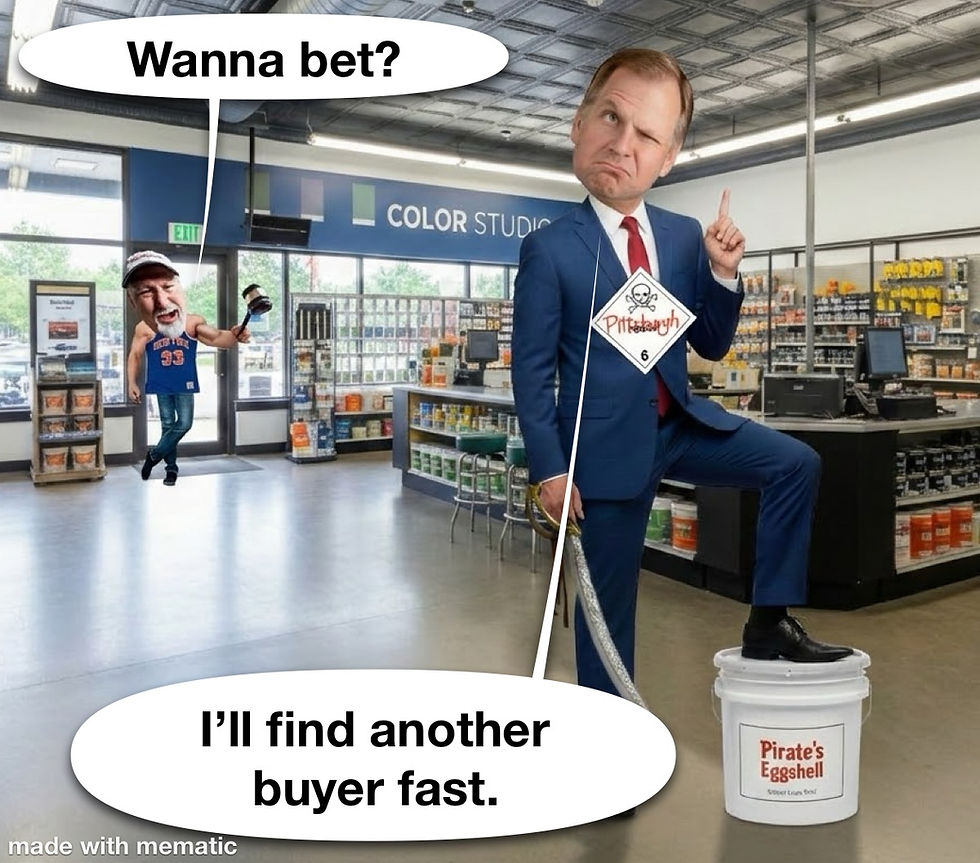
That employee’s accusations mirror those in other cases, and those made directly to me by the hundreds of Sherwin-Williams employees I spoke with as I investigated wage theft at that firm. Among the accusations is that Sherwin engages in a “uniform practice of rounding down the time,” whenever an employee punches the clock. Six times each day for an employee who works a full one, even rounding down the hours on their breaks before making them work the break without pay. A fraudulent double dipping which to feed CEO Heidi Petz's gluttony.

Keeping Petz up at night beyond indigestion is likely the fear that hundreds or even thousands of her employees in California will join this class action suit, an outcome I give some probability to even without my prodding, given California’s size and the likely number of employees in that state.
Almost all of whom are victims, though Heidi doesn't think they know it.
Early this week I was contacted by someone who spent more than 20 years employed by Sherwin-Williams, their text teasing a conversation I’d “have to sit down for.” Thirty minutes later, we were 29 minutes into a conversation which would exceed two hours. Had my bladder that range I would have let them keep going, captivated by the glance behind the curtain their decades with the company allowed.
They shared details of the machinations Sherwin goes through to steal from their employees, which I plan to share here once I organize that effort. I learned nothing new as we spoke, though their victimhood was as unique as all the others I have borne witness to through this investigation. Now likely approaching 750, nearly all of whom alleged some theft or workplace toxicity. As did this source who referred to their last years at Sherwin as “God-awful,” blaming their time there for contributing to their high blood pressure, anxiety and problems with drinking.
Referring to management as “mafia-like,” they shared a now-familiar tale of a “crafty” Sherwin-Williams, always looking to steal a dime or a minute. And if you want to hear it all you’re in the right place so stay tuned.
THE Retrospective
On my podcast this week I set the record straight on my relationship with Benjamin Moore, from the first pallet my great-grandmother bought off Benjamin in 1907 till Dan Calkins ended it all some 115 years later. The retrospective became necessary when the news at Kelly-Moore, Pittsburgh and now Sherwin-Williams skewed the demographics here, so that only a small percentage of my following now knows my history with Moore.
And it’s not what you might think.
Anchors Aweigh
When the Paint Dealer Magazine suddenly closed in 2018 my words had no home, until a friend suggested that I start blogging. Which gave them a place to reside, though there was no one there to read them. Unfamiliar with LinkedIn, I did the only thing I could think of to find readers and logged into the AllPro website and emailed every member to tell them I had moved.
Published in November of that year that blog was read by just 71 people, about a third of all AllPro members at that time. It was not the first time that AllPro had fostered my success. As a retailer, AllPro membership transformed my thinking about my stores, making me more efficient and more profitable than I could be on my own. Not just through better buying, but through the education I received from other members while gathering at these shows.
This week the group meets in Orlando, where the segment’s best dealers and vendors will talk paint and sundries, and I wish I was there. Walking the floor to see all things new, and into the bar at night to see my oldest friends. Last week someone asked me if I missed owning a paint store, akin to asking a ship if it misses its anchor once it puts out to sea.
But even the anchor is missed, when the ship returns to shore.